
Evaluation for

Change Makers

For a more peaceful, equitable,
and sustainable world

Evaluation for

Change Makers

For a more peaceful, equitable,
and sustainable world

I HELP...

I help philanthropies, non-governmental organizations, and other change makers strengthen their work and learn from it.

My purpose is to support organizations in:

  • Learning about how to support social change movements, fields, and advocates
  • Evaluating programs and strategies
  • Developing and using organizational learning systems and processes

My work helps organizations find and follow pathways through complex challenges, supporting change efforts that advance a healthier, more equitable world and a more safe and stable climate.

Drawing on more than two decades of experience working with community leaders, philanthropies, and global initiatives, I design evaluation strategies that fit the complexity of the work and translate evaluation into learning the people doing it can use.
Learn More About Me.

Evaluation should be in service to the work of people and communities, answering the questions that matter to change makers.

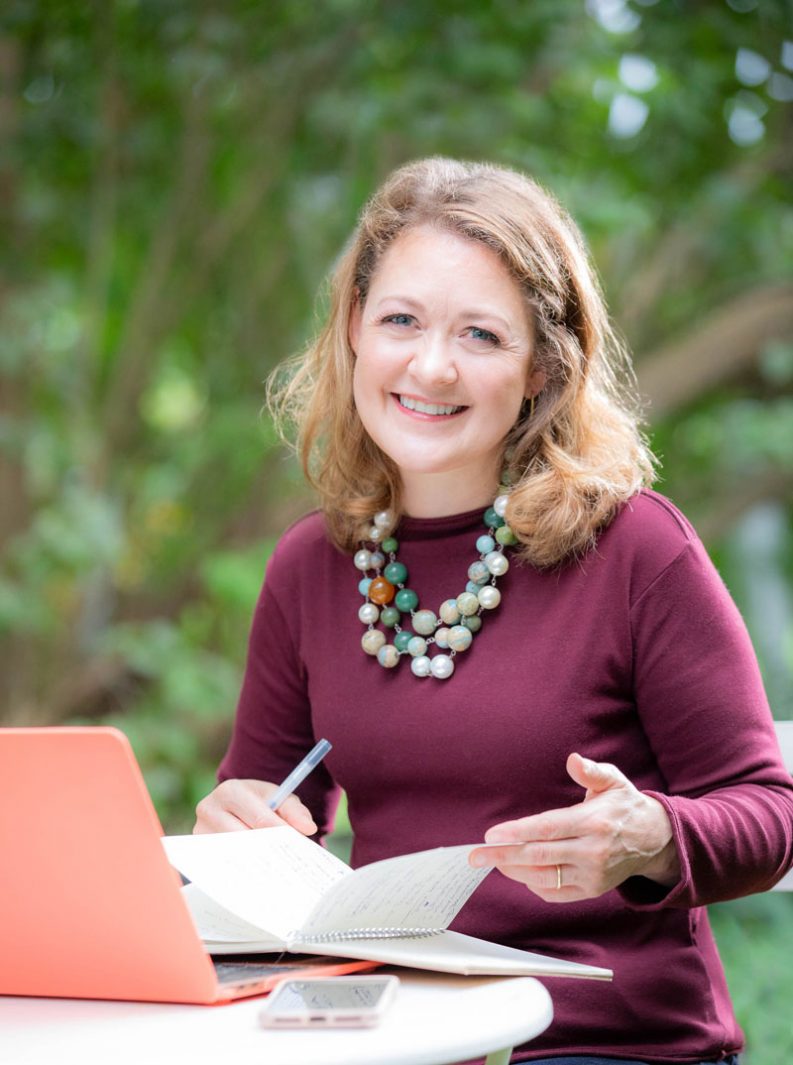
Rhonda Schlangen working at a table, smiling at the camera

Highlighted Works

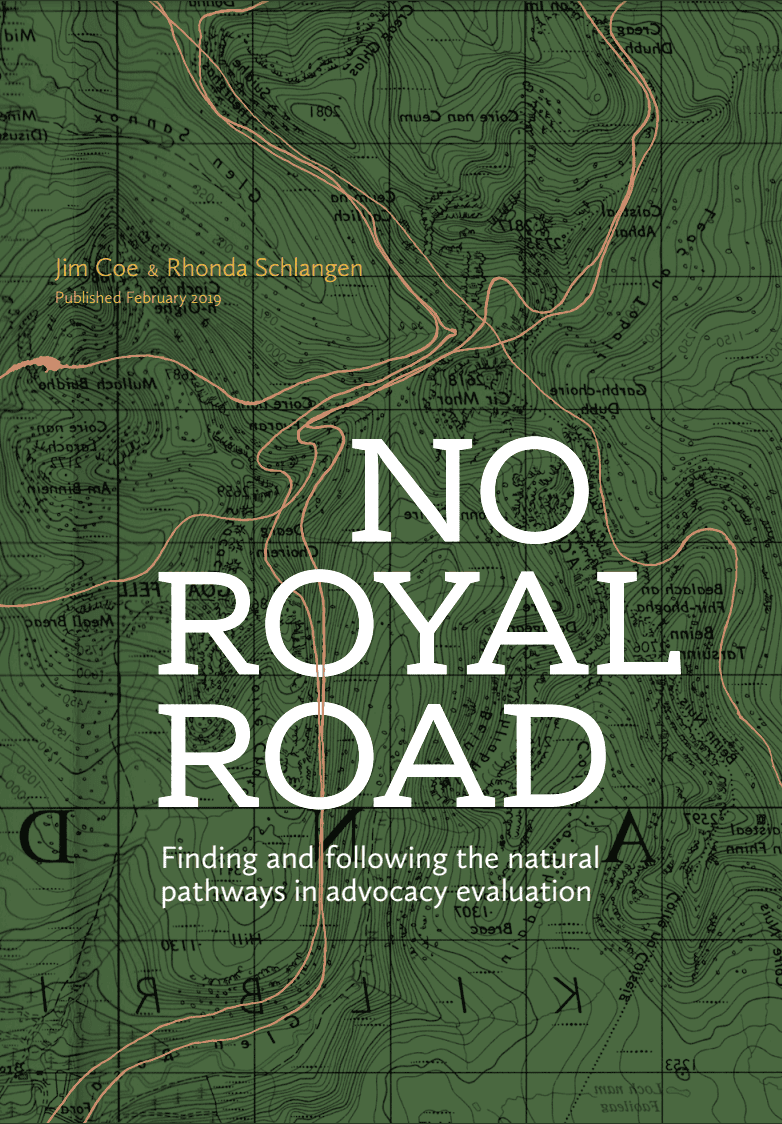
No Royal Road - article cover with map

No Royal Road: Finding and Following the Natural Pathways in Advocacy Evaluation

Complex change rarely unfolds in a straight line, and the work of influencing it doesn't either. The clear answers and clean attribution that conventional evaluation prizes can give a tidy picture, but the complexity they leave out is often where the most useful insight lives. In this widely cited brief, Jim Coe and I propose a different way to approach monitoring, evaluation, and learning, one that brings rigor to the uncertainty and keeps sight of what makes the work stronger.
What does it look like for a funder to walk alongside its partners, rather than lead from out front? With American Jewish World Service, this paper shares a model of responsive accompaniment, in which partners define their own priorities, funders learn as much as they give, and success is measured by the quality of the support provided.

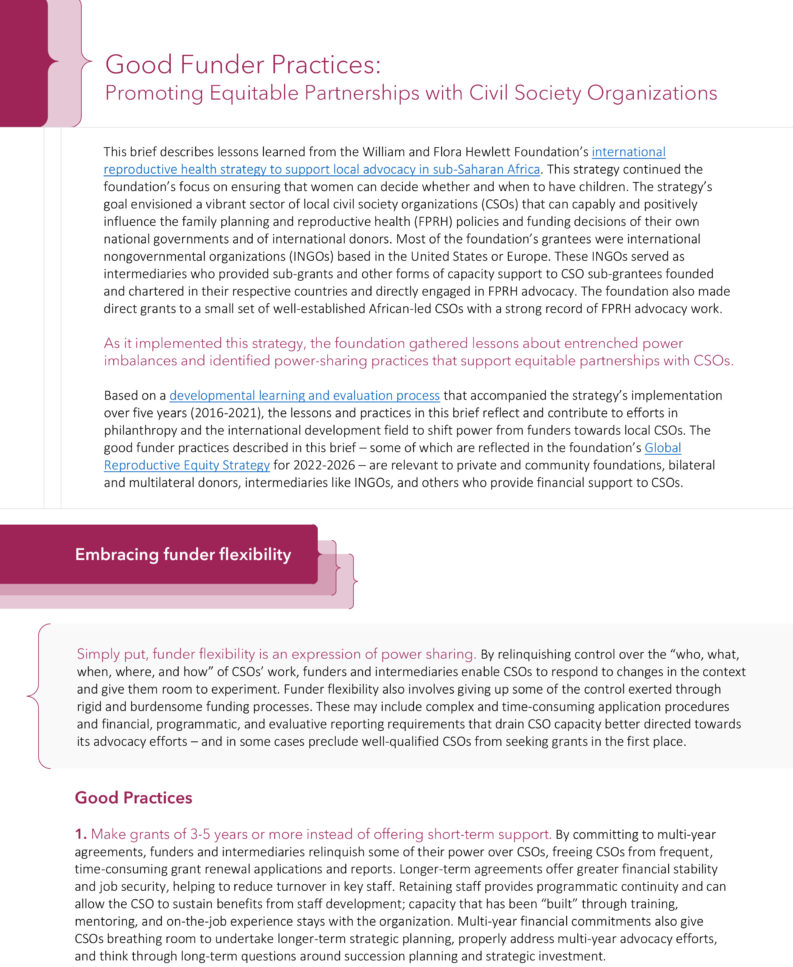
Drawn from a five-year developmental evaluation of the William & Flora Hewlett Foundation’s strategy in sub-Saharan Africa, this brief distills concrete practices funders can use to build more equitable partnerships and shift power toward the organizations doing the work.

Learn More About the Work I love

I am committed to supporting organizations that are dedicated to advancing social, economic, racial, environmental, and gender justice.